Here's the thing nobody says out loud
You can orgasm alone. Easily, reliably, sometimes intensely. But the moment your partner is there, something shifts. The sensation flattens, the arousal stalls, the whole sequence just doesn't complete. Then you both lie there in this awkward quiet, and you're left wondering if there's something wrong with you, or worse, with them.
There isn't. What you're experiencing is situational anorgasmia, and it's so common that I'd bet money most people with vulvas have been there at some point. The frustrating part? It has almost nothing to do with physical capacity and everything to do with attention, anxiety, and the peculiar way your nervous system behaves when another person is watching.
Why your body freezes when they're there
Orgasm requires what I call "neural permission." Your brain has to be convinced that it's safe to let go. When you're solo, that's straightforward. When there's another person, your system activates a bunch of competing priorities: Are they bored? Am I taking too long? Do I look weird right now? Is this what they want? That internal monologue doesn't just distract you. It literally dampens the neural signals that drive arousal and orgasm.
This isn't weakness. It's your nervous system doing exactly what it evolved to do: attend to external threats. In a partnered scenario, your brain categorizes that person as a potential source of judgment, and judgment equals threat. So it pulls resources away from pleasure and toward vigilance.
Add in the performance pressure. Most of us grew up internalizing the idea that sex should "just work" and that orgasm is something you owe your partner. That added weight is enough to throw off the whole sequence.
What actually changes the pattern
Three things shift situational anorgasmia reliably:
1. Removing the performance frame. When both of you agree upfront that orgasm isn't the goal, something weird happens. You relax. Your partner relaxes. The pressure lifts. This doesn't mean you won't orgasm. It means you stop scanning for it, stop tensing around it, and paradoxically make it far more likely.
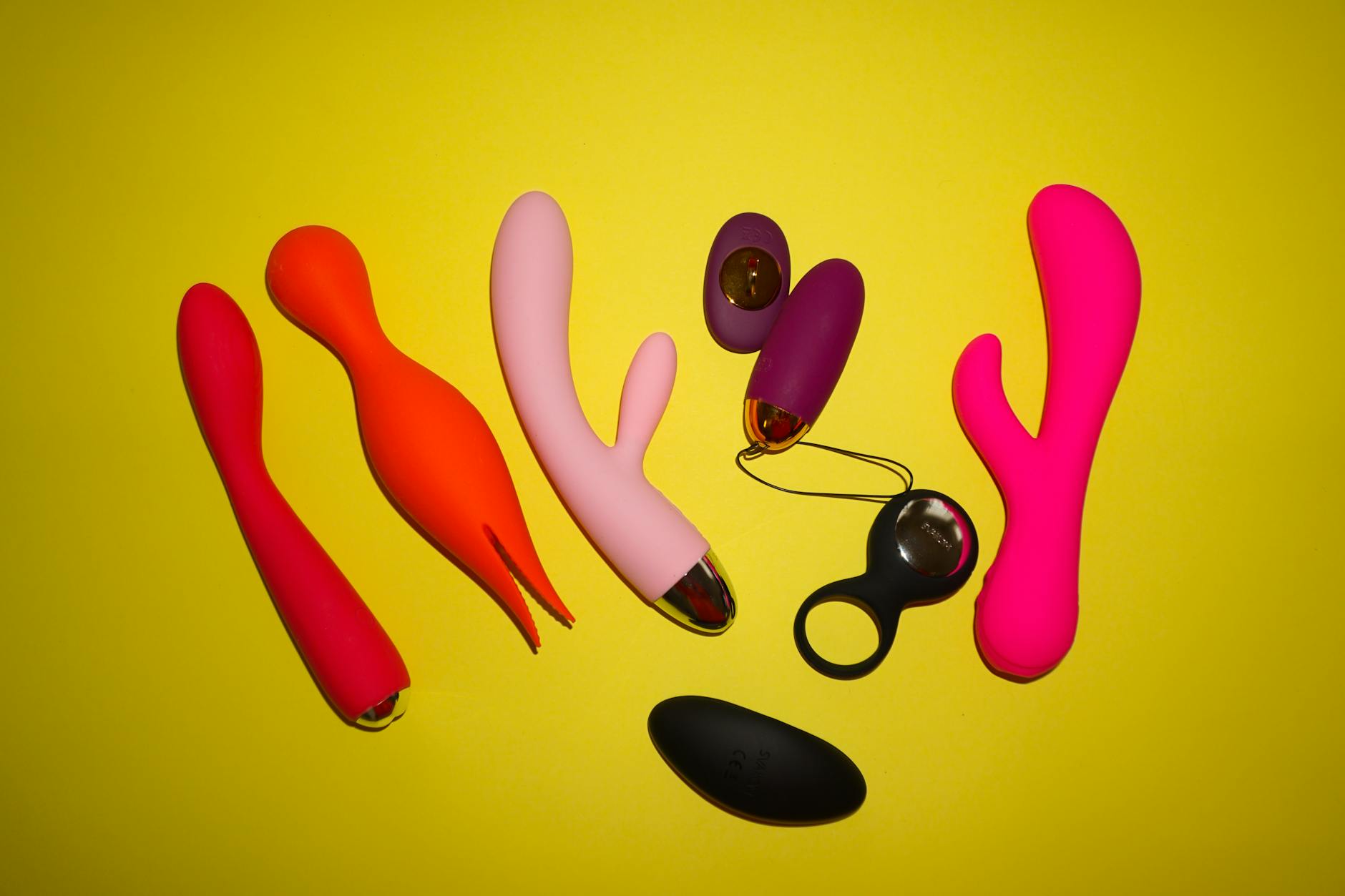
2. Adding novelty to reduce overthinking. New sensations demand attention. When you introduce a lemon vibrator into partnered sex, your brain has to attend to something concrete: the sensation, the rhythm, the intensity. That redirects the anxious loop. You go from thinking about whether you'll come to actually feeling the suction. That's huge.
3. Giving yourself explicit permission to focus on your own pleasure. This is the one that changes everything. Most partnered sex is built around attunement to the other person. A lemon vibrator makes it socially acceptable to say, "Right now I'm going to focus on what I'm feeling." That's not selfish. That's actually the fastest route to deeper connection because it means you're present, responsive, and genuinely engaged rather than performing.
How lemon clitoral vibrators fit into this
Lemon vibrators work for situational anorgasmia because they handle something specific: they stimulate the clitoris directly and intensely, which is the one thing a partner's body often can't replicate no matter how willing they are. When you add suction or air-pulse stimulation to partnered sex, you're giving your nervous system a clear focal point. The sensation is strong enough that your brain can't wander into the anxiety loop.
Here's how to use them:
Start with explicit conversation first. Not mid-sex. Before. Tell your partner: "I want to experiment with bringing a vibrator into this because I think it'll help me get there. This isn't about something being missing between us. It's about removing a specific block I notice." A good partner hears that as collaboration, not rejection.
Use it as an addition, not a replacement. The most effective setup I see is partnered touch plus the vibrator. Your partner is inside you or stimulating you manually while you hold a lemon vibrator on your clitoris. That combination gives you the intimacy and presence of your partner plus the focused stimulation your body needs. You're connected, they're engaged, and you're not performing.
Start low intensity. If you're already anxious about orgasm, introducing a powerful vibrator can feel like too much pressure. Begin at a lower setting (patterns 1-3 on most clitoral vibrators) and work up only if you want to. The goal isn't intensity. It's attention.
Give yourself 15-25 minutes minimum. Situational anorgasmia often involves a longer pathway to arousal because your nervous system is partially locked. Budget time. Tell your partner you might not come, and genuinely mean it. That paradoxically makes coming more likely.
The conversation that actually works
If you've never introduced a vibrator into partnered sex, the conversation feels massive in your head and is usually tiny in reality. Here's what I say to couples:
"I've noticed that I have a harder time coming when we're together, and I want to change that. I think if I could use a vibrator during sex, it would help me get out of my own head and actually stay present. This is about me getting myself where I need to be, not about what you're doing. Are you open to trying that?"
Most good partners say yes immediately. Some need a beat. The ones who push back are usually scared about one specific thing: that it means you don't want them, or that they've failed. That's real. Address it directly. "I want you here with me. What I need is a way to quiet my brain so I can actually feel you." That's not a small distinction.
Why suction-style lemon vibrators work better here
I specifically recommend suction or air-pulse vibrators like the Lem over traditional vibrators for situational anorgasmia because they create a different sensation profile. Suction feels less clinical and more... present. It's a pulling sensation rather than a buzzing one, which tends to engage the parasympathetic nervous system (the calming one) rather than amping up anxiety.
For people whose brains get stuck in performance mode, that matters. A buzz can feel urgent. Suction feels exploratory.
When to seek additional support
If you've tried this a few times and nothing shifts, there might be something deeper going on: past sexual trauma, untreated anxiety, or relationship dynamics that make genuine safety impossible. That's not a failure. That's information. Consider talking to a therapist who specializes in sexuality and intimacy. Sometimes the body's resistance is pointing to something that needs attention.
Also, if orgasm has always been elusive (not just with a partner, but solo too), that's a different conversation. How to Use Lemon Vibrators When You Struggle With Low Orgasm Consistency digs into that specific angle.
The bigger picture
Situational anorgasmia often feels like a personal failing. It's not. It's your nervous system being rational about a situation that, at a biological level, involves vulnerability and exposure. The fact that you can orgasm alone means your body works fine. What you need is permission, presence, and sometimes a little external help to redirect the attention loop.
That help might be a lemon vibrator. It might be communication. It might be time and patience. Usually it's all three.
Questions people ask
Will using a vibrator during partnered sex make me dependent on it?
No. The dependency myth comes from thinking vibrators "desensitize" the clitoris. They don't. Vibrators train your nervous system to recognize a particular sensation and respond to it. Once you've had that experience, your body knows it's possible. Over time, many people find they need less intensity or can orgasm with their partner even without the vibrator. The vibrator is often a stepping stone, not a permanent requirement.
What if my partner feels insecure about the vibrator?
That's worth taking seriously, and it's also worth addressing directly. The insecurity is usually about one of three things: feeling replaced, feeling judged, or feeling like they're not enough. None of those are true, but your partner needs to hear you say it. "This isn't about you. This is about me quieting my own anxiety so I can actually be present with you." Sometimes it helps to use the vibrator while your partner is actively engaged with you (inside you, kissing you, touching you) so they're clearly part of the experience, not sidelined.
How long does it usually take for this to work?
It varies. Some people have a breakthrough the first time they try it because the pressure immediately lifts. Others need 3-5 sessions before their nervous system believes the new setup is safe. If nothing has shifted after 5-6 times, there's probably something else going on (anxiety, relationship dynamics, medication side effects) that needs attention.
What if I can only orgasm with the vibrator and never without it?
First, that's fine. Your orgasm is not a failure if it requires a tool. Second, if you want to change that, it's possible. The pathway usually looks like: use the vibrator frequently to rebuild confidence that orgasm is accessible. Then gradually experiment with lower intensities. Then experiment with other stimulation in between vibrator sessions. Your nervous system will gradually expand what it perceives as "safe" for pleasure.
Is there a difference between solo vibrators and ones designed for partnered use?
The best vibrators for partnered anorgasmia are ones you can use comfortably while your partner is inside you or actively touching you. That usually means smaller, more ergonomic designs like lemon clitoral vibrators or suction-style devices. Larger wands can work, but they're harder to position during penetration. The design matters less than the fact that you can actually use it during sex without it being awkward.
What if my partner wants to control the vibrator and I find that stressful?
Then don't let them. You hold it. You control the intensity, the rhythm, the angle. If your partner holding it makes you anxious, that anxiety will block the whole sequence. Keep the power (literally) in your hands. Your partner's role is presence, connection, and engagement. Your job is feeling. Those are separate tasks, and that separation is actually what makes this work.