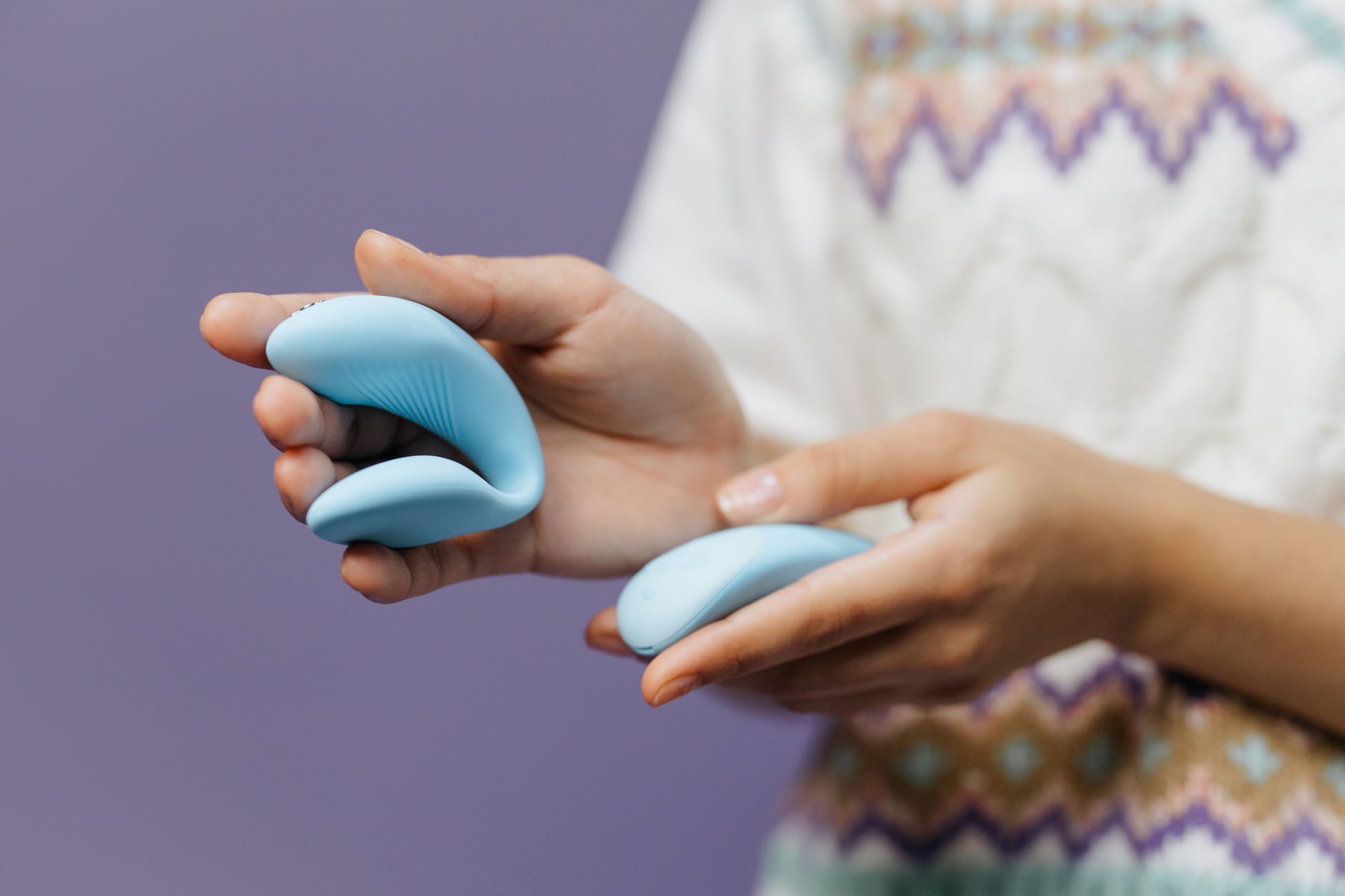
Let's start with the hard truth
When erectile dysfunction enters a relationship, sex often stops entirely. Not because your partner doesn't want you. Not because desire has evaporated. It stops because performance anxiety spirals, shame compounds, and both of you freeze. A lemon vibrator doesn't fix ED. But it does something more useful: it removes the pressure that makes ED worse and rebuilds the pleasure you both thought was gone.
Here's what I see in my practice: couples use lemon clitoral vibrators not as a workaround, but as a reset button. The pressure to "perform" dissolves. Your pleasure becomes the focus again. And paradoxically, that often restores erectile function faster than any pharmaceutical intervention alone.
Why ED kills desire (and why that's not your fault)
Erectile dysfunction is physiological, psychological, or both. Your partner's brain floods with cortisol (the stress hormone). Anxiety about staying hard becomes a self-fulfilling prophecy. He stops initiating. You stop asking. The bed becomes a place that feels like failure instead of pleasure. After months of this, desire genuinely dims for both of you.
That's not a relationship problem yet. It's a nervous system problem wearing a sexual disguise.
What lemon vibrators actually change
Three things happen when you introduce a lem vibrator into partnered sex:
1. Pressure releases. His erection is no longer the entire event. Your pleasure becomes the main event. He can stay soft and still give you an orgasm. The stakes drop. Literally and figuratively.
2. Pleasure rebuilds. You orgasm. He witnesses your pleasure. That combination rewires both your nervous systems away from anxiety and back toward connection. Witnessing a partner's orgasm is often more arousing than the sex act itself.
3. Confidence returns. After weeks or months without partnered sex, the first time you both finish together again (even if he's not inside you) resets your entire perception of "normal." You remember that you're still a sexual couple.
The practical setup: how to introduce it without awkwardness
Don't frame it as "because you have ED." Frame it as "I want to try this because it feels incredible and I want to share that with you."
Honestly, that's not even dishonest. Lemon vibrators feel different and better. You do want to share it. You're not lying; you're just not leading with the problem.
Start when you're both clothed, not in bed. Show it to him. Explain the suction mechanism (it's tactile, not intimidating). Let him hold it. Let him see it's not a replacement for him; it's an addition. Many partners are relieved to learn that a lemon clitoral vibrator can give you consistent pleasure without him having to "perform" anything.
When you're ready to try it partnered, here's the rhythm: foreplay as usual. When arousal is building (maybe 15 minutes in), introduce the vibrator. You control it. He can hold you, kiss you, use his hands on your body while you use the vibrator. He's still touching you. He's still present. He's just not carrying the entire weight of your pleasure on his erection.
Why suction vibrators work better than traditional vibrators for ED couples
Traditional vibrators can feel too intense, too clinical, or too solo. A lemon sucker vibrator feels more like a natural extension of touch. The suction sensation engages nerves differently than direct vibration, which often means you can stay more present with your partner instead of disappearing into sensation.
Also, lemon vibrators are quieter and less intimidating-looking than wand vibrators. That matters for partners carrying shame. A lem vibrator looks elegant. It doesn't scream "medical device" or "I gave up on you."
The conversation you need to have first
Don't introduce the vibrator mid-argument or during a rejection. Don't introduce it when he's already stressed or ashamed. Introduce it during a moment of genuine connection. Maybe over coffee on a Sunday morning.
Say something like: "I miss us. I miss how pleasure feels between us. I found this vibrator that I want to try, not because anything's wrong with you, but because I want to feel good with you again. Will you try it?"
If he says no, don't push. Ask why. Is it shame? Is he worried it means you're leaving? Is he afraid it'll make the ED worse? Listen. Most "no" answers are actually fear wearing a different mask.
If he's hesitant, offer a middle ground: "We don't have to use it for penetration. We could just explore what it feels like together, no pressure to do anything." Removing the performance dimension often removes the resistance.
What happens after the first time (and why it gets better)
You probably won't have earth-shattering sex the first time. That's normal. What matters is that you broke the pattern. You created a scenario where pleasure happened without him having to stay hard. That's enormous.
After that first time, something shifts. He realizes the vibrator isn't a competitor; it's a collaborator. You realize that pleasure can return even when ED is still present. The anxiety begins to loosen. Over the next few weeks, as you keep using it, two things often happen: his erectile function often improves on its own (because cortisol is down), and your emotional intimacy deepens because you're not trapped in the performance trap anymore.
Many couples find that once ED anxiety is removed, they actually don't need the vibrator every time. But they keep using it because it feels amazing, and because it reminds them both that they're a team, not opponents.
When to involve a doctor
If ED is new and sudden, see a doctor. It can signal cardiovascular issues, hormonal changes, or medication side effects. All of those are treatable. Using a lemon vibrator is not a substitute for diagnosis; it's a bridge while you're getting help.
If ED is happening alongside depression or severe anxiety, therapy is essential. A vibrator helps with the physical part. Your partner needs help with the mental part.
If ED persists despite low stress and medical clearance, testosterone therapy, medications like sildenafil, or specialized sex therapy might all be worth exploring. A vibrator works best as part of a holistic approach, not instead of one.
The emotional truth
Using a lemon clitoral vibrator with a partner who has ED is an act of pragmatism and love. You're saying: "I'm not waiting for the problem to fix itself. I'm not punishing you for something medical. I'm choosing pleasure for both of us, right now, as we are." That's radically different from the shame and withdrawal that usually happens. It often transforms not just the sex, but the entire relationship.
People also ask
Will using a vibrator make his erectile dysfunction worse?
No. In fact, the opposite is usually true. Performance anxiety is one of the biggest drivers of ongoing ED. Using a vibrator removes that pressure, which often improves erectile function over time. Your partner stops associating sex with failure and starts associating it with pleasure again. That nervous system shift is powerful.
Should I use the vibrator only when he can't get hard, or all the time?
Use it whenever it feels good. Some couples use it every time. Some use it occasionally. Some notice that after a few months, his ED improves and they need it less often. The point isn't dependency; it's that clitoral vibrators add pleasure to partnered sex, ED or not. You're not using it because the sex is broken; you're using it because pleasure matters.
Can he use the vibrator on me, or do I have to do it myself?
Absolutely he can. Many couples find that having him hold the lemon vibrator while he's inside you, or while you're having other kinds of intimate contact, deepens the connection. He gets to be part of your pleasure in a new way. It's collaborative, not solo.
What if he feels threatened by the vibrator?
That's usually about shame, not the vibrator itself. Have a conversation outside the bedroom. Say: "I love you. I want us to feel good together. This isn't about you being inadequate; it's about us both getting pleasure." Sometimes therapy helps him process the feelings underneath the resistance. Sometimes it just takes time and reassurance as you keep using it and nothing bad happens.
Is it normal that I can't orgasm without the vibrator now?
Maybe, maybe not. Some bodies genuinely need consistent clitoral stimulation to orgasm. That's not broken; that's just how you're wired. If you're worried about dependency, try how to use lemon vibrators when solo pleasure feels guilt-free for the first time to explore your own pleasure separately. That often gives you more confidence and flexibility overall.
Can lemon vibrators actually help restore erectile function, or is that wishful thinking?
It's not guaranteed, but it's also not wishful. The mechanism is real: removing performance anxiety and cortisol often improves erectile function. Add that to improved cardiovascular health, lower stress, and renewed intimacy, and yes, you'll often see improvement. But it works best paired with medical care, lifestyle changes, and sometimes therapy. It's one piece of a bigger puzzle.
ED doesn't mean the end of partnered pleasure. It means you get to rebuild it together, often in ways that feel even more connected than before. A lemon vibrator is one of the best tools for that reset.