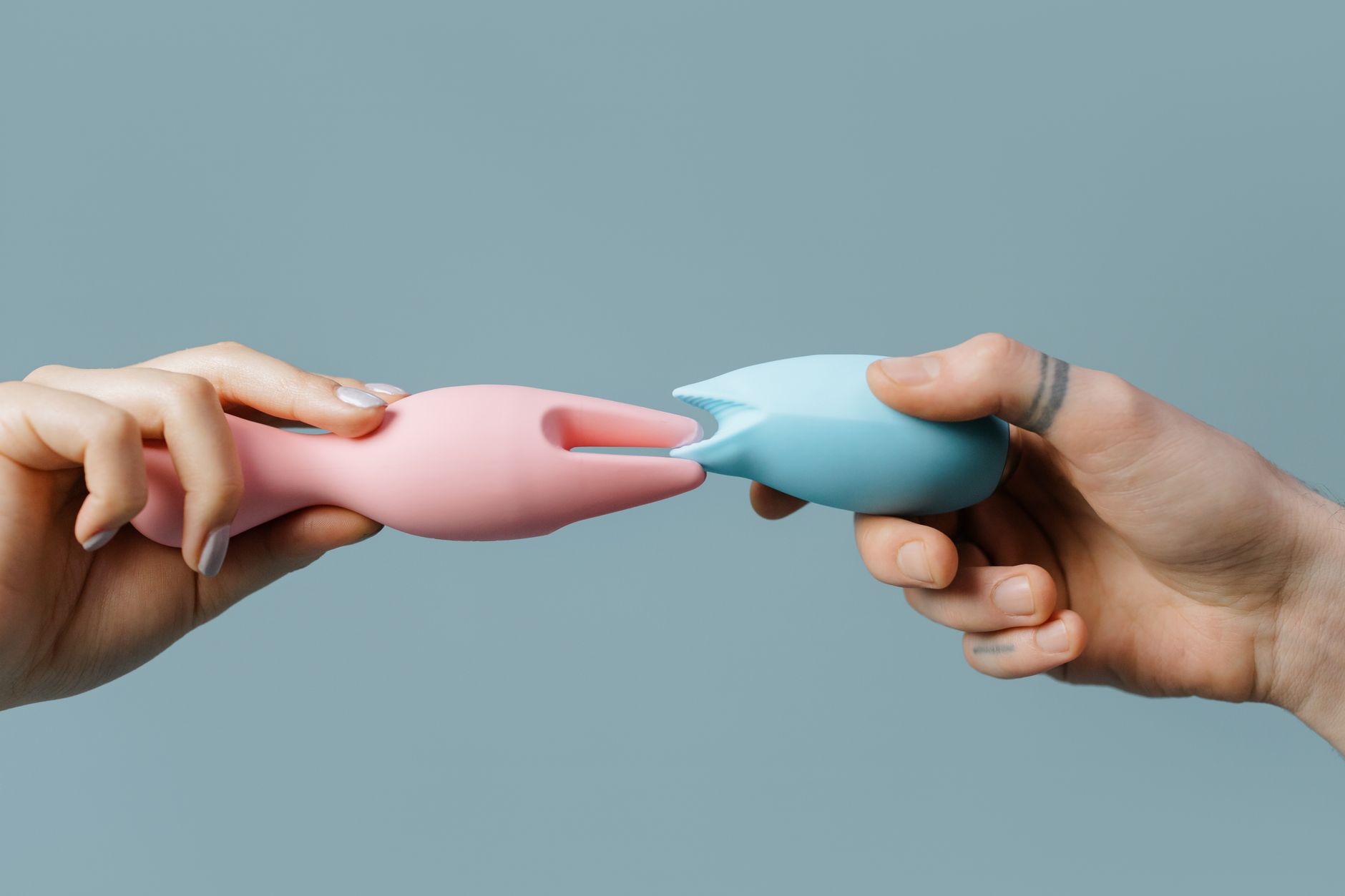
The sensitivity truth nobody tells you
Your clitoris doesn't lose sensitivity with age. It shifts. That's different, and it matters.
Most people assume that pleasure gets smaller, duller, or harder to access as the years go by. Some of my clients have spent a decade thinking something broke, when really their nervous system just reorganized itself. Once they understand what's actually happening, everything changes.
What actually happens to clitoral sensitivity over time
Three things shift:
Nerve response changes. The clitoris contains roughly 8,000 nerve endings, and how those fire stays relatively stable. But the receptive bandwidth narrows slightly. Where a 25-year-old might feel pleasure across a broader range of pressure and speed, a 45-year-old might find that very light touch barely registers, and moderate pressure feels exactly right.
Tissue density evolves. Collagen production slows around age 30, accelerating after 40. Thinner, more delicate tissue means direct intense vibration can feel raw or almost irritating instead of pleasurable. This is why so many people over 40 find that suction-based stimulation, like a lemon clitoral vibrator, feels more comfortable than traditional vibration. The Lem's suction mechanism doesn't rely on direct friction against vulnerable tissue.
Blood flow patterns shift. Arousal takes longer because vasocongestion (blood flooding to the genitals) is slower. That's not a deficit. It's just the timeline changing. If you budget time differently, sensation stays rich.
Why this matters for lemon vibrators specifically
Lemon sexual toys use air-suction technology, which bypasses many of the friction problems that plague people with age-related sensitivity changes.
Traditional vibration works by creating rapid oscillation against the skin. On mature, thinner clitoral tissue, that can feel too direct. Suction, by contrast, creates a gentle pulling sensation that stimulates the entire clitoral complex, not just the surface. The effect is less sharp, more diffuse, and for most people over 40, wildly more comfortable.
The lemon vibrator's suction mechanism also means you don't have to choose between gentle and effective. You can dial the intensity on a lemon clitoral vibrator and land in a sweet spot that simply doesn't exist with traditional buzzers.
The adjustment formula
Here's what I recommend to clients navigating this transition:
Start at the lowest intensity and stay there for two weeks. Your nervous system needs to recalibrate. Jumping straight to medium because that's where you used to peak bypasses the pleasure available at lower settings. Most people discover that pattern 1 or 2 on a lemon vibrator is where the good stuff actually lives now.
Extend foreplay by 10 to 15 minutes. If arousal used to peak in 5 minutes, plan for 15 to 20. This isn't a failure. It's an opportunity. Longer warm-up means deeper relaxation, which paradoxically makes sensation more acute. Your brain has time to settle, which lets pleasure land better.
Build in a waiting period between sessions. If you used to use lemon vibrators three times a week without issue, try two. Tissue recovery is slower, and sensitivity actually improves with a bit of rest between uses. More space between sessions often means more satisfaction during them.
Pay attention to where you're directing the suction. As tissue changes, the angle matters more. The Lem works best when positioned directly over the clitoral hood rather than off to one side. The suction pulls the hood back slightly, creating a gentle pressure on the clitoral body underneath. Spend 30 seconds just finding that angle. It's worth it.
What changes in sensation actually feel like
Most clients describe it this way: pleasure used to feel sharp and immediate. Now it feels deeper, more sustained, less switchable on and off. The orgasm might be slower to build, but once it arrives, it often lasts longer and feels more full-body.
Some people report that sensation becomes more concentrated in specific zones rather than distributed across the entire vulva. Others find that their orgasms shift from clitoral to blended, because the longer build time naturally engages more tissue. A few discover that sensation feels almost reversed. Direct pressure used to feel good. Now it's the release of pressure that hits.
All of this is normal. None of it means something broke.
When to use patterns vs. intensity
If your lemon vibrator has adjustable patterns and intensity, here's how to think about it: patterns are your friend more than intensity as you age.
A complex, multi-rhythm pattern creates stimulation without necessarily increasing power. It keeps your nervous system engaged by introducing novelty without the harshness that comes with amping up raw intensity. Many people who think they've lost sensitivity are actually just bored with the same single-pulse vibration. Switching between patterns on a lemon clitoral vibrator often restores the sense of discovery that intensity used to provide.
If you do adjust intensity upward, do it in increments of one setting over several weeks. Give your tissue time to adapt.
The role of lubrication
Lubrication becomes more important and more noticeable as you age, partly because thinner tissue is more prone to micro-abrasions, and partly because the psychological experience of wetness contributes to arousal.
Even if your body produces plenty of natural lubrication, adding a water-based lube creates a smoother glide for the suction cup of your lemon vibrator and reduces any slight tugging sensation on the hood. More slip means the suction mechanism works more efficiently, and you need less intensity to feel the effect. This is not compensation. This is optimization.
Partners and communication
If you're using lemon vibrators with a partner, the biggest shift is usually in tempo. Younger bodies can sync up pretty quickly. Mature bodies need more negotiation.
The conversation isn't about what feels good anymore. It's about timing. "I need 20 minutes of foreplay instead of 10" is a completely different request than "I don't feel pleasure anymore." One invites your partner into a longer, more luxurious experience. The other invites shame. Choose the first framing.
Allow your partner to touch you during the build phase, but not necessarily during the suction phase. The combination of external touch and internal suction can feel overwhelming on sensitive tissue. You might find you prefer solo exploration with your Lem, then partner touch afterward, or vice versa. Experiment without judgment.
When something feels wrong vs. just different
Sensitivity shift is normal. Pain is not.
If your clitoris feels sore or raw after using a lemon vibrator, you're either using too much intensity too quickly, using it too frequently, or the tissue itself needs attention from a gynecologist. Don't power through. Dial back, wait a few days, and reassess. If soreness returns, get it checked.
If sensation vanishes completely and suddenly, that's also worth a professional conversation. Normal aging doesn't cause sudden total numbness. That can signal nerve involvement, hormonal shifts worth treating, or sometimes a medication side effect.
If pleasure feels duller but present, and it's been a gradual shift over months or years, that's age-related sensitivity change, and this whole framework applies.
The reframe that changes everything
Here's what I tell every client navigating this transition: sensitivity shift is not a loss. It's a refinement.
Younger bodies are responsive. Mature bodies are discerning. Your clitoris isn't getting worse at receiving pleasure. It's getting better at it. It's becoming more specific about what lands and what doesn't. That specificity is powerful.
Lemon vibrators, with their intelligent suction mechanism and range of adjustable settings, are basically built for this phase of life. They honor the fact that your body has evolved, and they meet that evolution with tools that work with it rather than against it.
Using a lemon clitoral vibrator when sensitivity shifts isn't damage control. It's fine-tuning your own pleasure.
Frequently asked questions
Does clitoral sensitivity actually decrease with age, or does it just feel that way?
It's both. The tissue does change physiologically. Collagen density decreases, blood flow patterns shift, and the nervous system's response bandwidth narrows slightly. But a lot of what people perceive as decreased sensitivity is actually just a mismatch between old technique and new neurology. The good news: once you adjust your approach, sensation often feels richer and more nuanced, not smaller.
Why does suction feel better than vibration as I get older?
Suction doesn't rely on direct friction against delicate tissue. Instead, it creates a pulling sensation that engages the entire clitoral body, including tissue beneath the surface. On mature skin that's thinner and more sensitive, this distributed approach feels more comfortable than the sharp, localized pressure of traditional vibration. A lemon vibrator's suction mechanism is particularly effective because it's specifically designed around this principle.
How much longer should foreplay take as I age?
There's no universal answer, but 10 to 15 minutes longer than your previous baseline is a good starting point. Some people find 15 minutes is ideal. Others eventually settle into 20 to 25. The key is treating this as an upgrade, not a chore. Longer arousal time means deeper relaxation, which paradoxically makes sensation sharper and more pleasurable.
Can I still have intense orgasms if my clitoral sensitivity has changed?
Yes, though intensity might feel different. Orgasms often become less sharp and more sustained. The buildup takes longer, but once it arrives, it frequently feels deeper and more full-body. Many people describe post-40 orgasms as more satisfying than younger ones, even if they're not as "explosive." Different doesn't mean diminished.
Should I switch away from my old vibrator and get a lemon vibrator instead?
Not necessarily. If your current toy still works for you, keep it. But if you're finding that you need maximum intensity to feel anything, or if direct vibration has started to feel uncomfortable, trying a lemon clitoral vibrator is worth it. The suction mechanism often reveals sensation that traditional vibration was masking.
What if I'm using hormonal medications or supplements that affect sensation?
If you're on medication that dulls sensation, sensitivity shift and medication effects can compound each other. Before adjusting your vibrator technique, it's worth checking with your doctor whether your medication is contributing. Sometimes a small dose adjustment or timing change can help. In the meantime, all the techniques here still apply. You might just need to move more slowly through the progression.
The bottom line
Clitoral sensitivity doesn't disappear as you age. It evolves. Your body is asking for a different approach, not a goodbye to pleasure. When you meet that evolution with the right tools, lemon vibrators can actually become more central to your sex life than they were before, not less.
If you're noticing sensitivity shifts or struggling to find pleasure with your current setup, that's not a problem to solve. It's an invitation to explore. Your clitoris has decades of good stuff ahead.