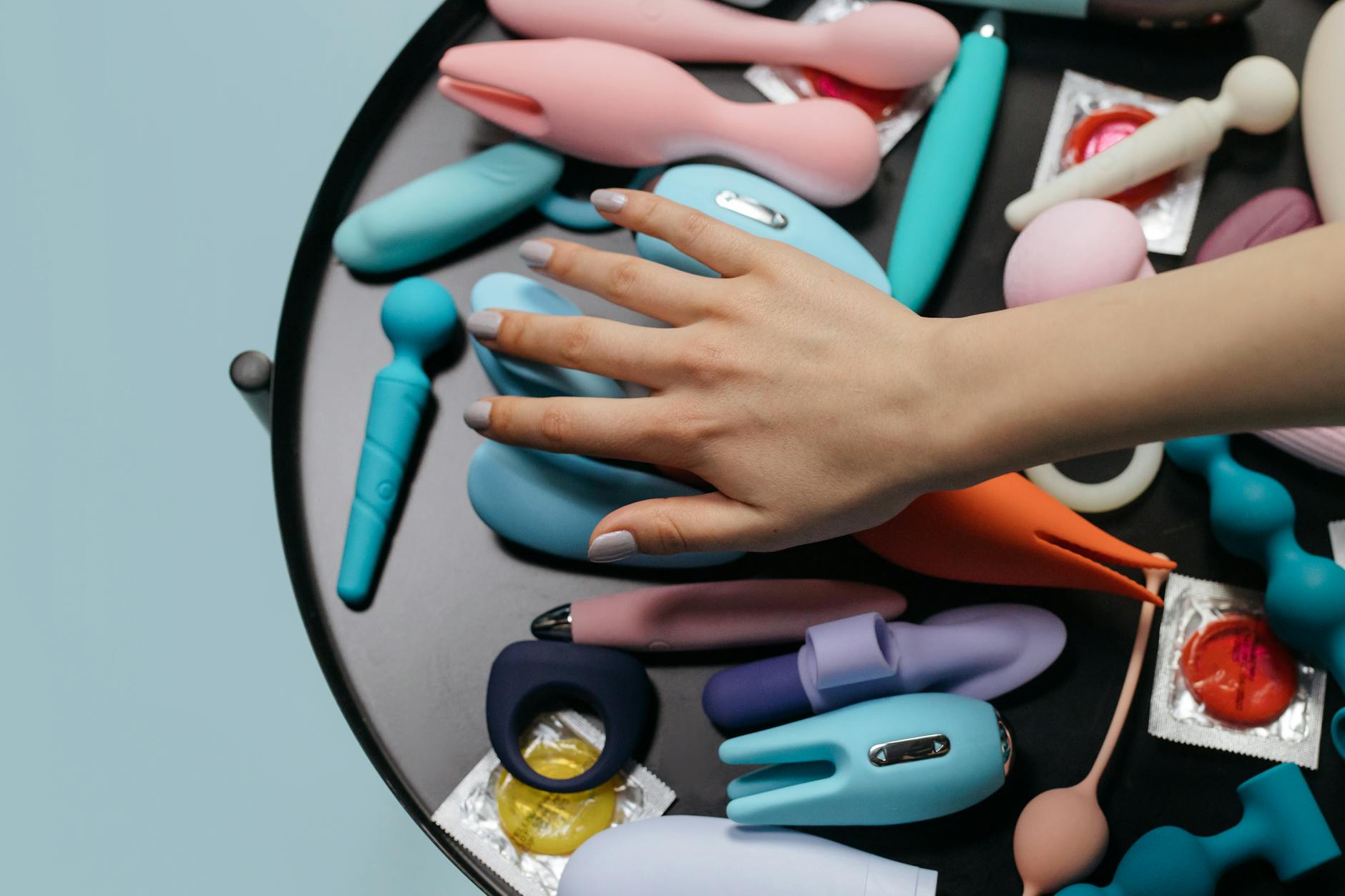
Here's what stress actually does to desire
Let's be honest. When you've been running on fumes for two years, pleasure isn't just low. It's gone. Like, you could watch someone undress in front of you and feel nothing. Not rejection, not anxiety. Just a blank, neutral blankness.
That's not broken. That's your nervous system doing exactly what it's designed to do under threat.
When cortisol stays elevated for months or years, your brain deprioritizes everything that isn't survival. Desire, sensitivity, orgasm capacity. All of it gets shelved. Your hypothalamus literally downregulates dopamine and reduces blood flow to your genitals. It's efficient and also completely exhausting.
Why stress kills arousal faster than anything else
Stress is the one variable that touches almost everything in sexual function. Unlike medication side effects or hormonal shifts, which typically affect one or two pathways, chronic stress hits the whole system at once.
First, it floods your body with cortisol. That hormone is brilliant for sprinting away from danger, terrible for letting your nervous system relax enough to feel pleasure. Second, it pulls attention inward. You're monitoring your body for threats, not savoring sensation. Third, it demolishes your sense of safety. Desire requires at least a baseline of feeling secure, and years of being overwhelmed erases that completely.
I've worked with hundreds of people who suddenly realize their dead libido isn't actually dead. It's been hibernating under stress. The moment they name that connection, they stop blaming themselves, which paradoxically makes it easier to restart arousal.
What lemon vibrators do differently for stress-numbed bodies
When desire is gone, you need a device that doesn't require you to already feel turned on to create sensation. That's where lemon vibrators shine.
Unlike traditional vibrators that rely on you building momentum through friction and anticipation, the suction mechanism of lemon vibrators (and the lemon clitoral vibrator specifically) works neurologically differently. The suction pattern activates nerve clusters in the clitoris in a way that bypasses the need for psychological arousal to get started.
Think of it this way. A regular vibrator is like asking your nervous system to dance. A lemon vibrator is like giving your nervous system permission to just sway for a minute and see what happens. The stimulation is more localized, the rhythm is consistent, and critically, you don't have to "get into it" first.
How to restart sensitivity when you're completely numb
Three tactical shifts make a real difference here.
Start with the lowest setting and stay there for a while. If you've been numb for months, your clitoral nerve density is still fully intact, but your brain's reward circuits have gone quiet. Low-level, consistent stimulation wakes them up without overwhelming a nervous system that's already tired. Set a lemon vibrator to pattern 1 or 2 and use it for 10-15 minutes without expecting anything. No goal. No pressure to orgasm. The only job is to notice sensation.
Separate pleasure from performance. This is where most people fail. They use a vibrator while thinking "Will I come? Can I still come? Is this working?" That internal monologue is just cortisol talking. You're stress-checking instead of pleasure-seeking. The moment you notice that voice, name it ("That's the stress talking"), and redirect your attention to pure sensation. Not whether it's working. Just what it feels like.
Rebuild nervous system safety first. You can't restart arousal while your body is still in threat mode. That means addressing sleep, exercise, and whether the major stressor is actually diminished or just being white-knuckled through. A lemon vibrator can help, but it's not a substitute for fixing the underlying stress. Use it as one part of a bigger reset, not the whole solution.
Why solo exploration matters more than partnered pleasure right now
Here's something people don't expect to hear from a relationship specialist. If you're in a partnership and your desire has flatlined from stress, the best first step is often solo time with a vibrator.
Why? Because partnered sex adds a layer of pressure and performance anxiety on top of an already-taxed nervous system. You're monitoring whether they're enjoying themselves, whether you should orgasm faster, whether the lack of desire means you're falling out of love. That's noise.
Solo exploration with a lemon vibrator removes all of that. You get to feel sensation without commentary. You get to stop whenever you want. You get to spend 20 minutes discovering that yes, you can still feel pleasure, you've just been buried under stress. That discovery is healing. It also rebuilds your confidence for partnered pleasure later.
Building back desire as stress decreases
As you start to see shifts in your overall stress level, you can increase intensity and complexity. Move from pattern 1 to pattern 3. Use it for longer stretches. Try different positions. Introduce it during partnered time if you have a partner.
The key is tracking it alongside your actual stress reduction. If work is still crushing you, you're unlikely to feel much change in arousal no matter what vibrator you use. If stress is genuinely decreasing but desire isn't coming back, that's the moment to check in with a therapist or doctor.
Don't get stuck believing that numbness is permanent. Brains and bodies have remarkable capacity to rewire. Lemon vibrators work because they give your nervous system the gentlest possible doorway back into sensation without any performance pressure whatsoever.
The permission piece nobody talks about
Honestly, the mechanical part of using a lemon clitoral vibrator is simple. The hard part is giving yourself permission to do it when you feel broken.
You're not broken. Your nervous system is doing exactly what it evolved to do. But it also means you deserve something that meets you where you actually are, not where you think you should be. A lemon vibrator does that. It doesn't require you to already feel sexy. It doesn't require a partner. It doesn't require you to "perform" desire.
It just requires you to sit quietly for 15 minutes and let sensation happen. That's it. And from there, everything else rebuilds.
People also ask
Can stress permanently kill your sex drive?
No. Arousal capacity is resilient. Chronic stress suppresses it, but it's not permanent damage. The moment stress decreases and your nervous system feels safe again, desire typically returns. Some people notice shifts within weeks of genuine stress reduction. Others take months. The timeline depends on how long you were stressed and how completely you can step away from the stressor. Working with a therapist while using a lemon vibrator to rebuild sensation creates the fastest recovery.
How long does it take to feel pleasure again after burnout?
That varies wildly. Some people feel the first glimmers of arousal within 2-3 weeks of starting to address stress. Others need 2-3 months. The key variable isn't the vibrator. It's how much your actual stress load has decreased. A lemon vibrator can help you notice sensation returning, but it can't magic away the root cause. If you're still in the same high-stress situation, pleasure recovery will be slower.
Is using a vibrator when you have no desire actually helpful?
Yes, surprisingly. Even when you feel completely numb, consistent gentle stimulation with a device like a lemon vibrator can reactivate nerve pathways and signal your brain that pleasure is possible. You're not trying to orgasm or prove anything. You're just creating a sensory experience in a safe way. That repetition helps rebuild arousal circuits.
Should I tell my partner I'm using a vibrator to restart desire?
It depends on your relationship. Some partners feel hurt if they think the vibrator means you don't want them. Others find it relieving because they understand desire isn't about them, it's about your nervous system recalibrating. The best approach is to frame it clearly. "I'm using this to help my nervous system remember how to feel pleasure while I'm working through stress. It's not about you or our relationship. It's about me rebuilding my own arousal capacity." That honesty usually opens conversation instead of closing it.
Can lemon vibrators help if depression is also killing your desire?
Partially. Lemon vibrators can help restore sensation and rebuild some arousal capacity. But if depression is the root cause, the vibrator is a support tool, not a cure. Depression requires proper treatment like therapy or medication. Use the vibrator as one part of a larger recovery plan that includes professional mental health support.
What if I still feel nothing even with a lemon vibrator?
That's valuable information, not failure. If after 3-4 weeks of gentle exploration with a low-intensity vibrator you're feeling nothing at all, that usually means either the stress is still too high or something else is at play (medication effects, hormone changes, or depression). That's the moment to see a therapist or doctor instead of pushing harder with the vibrator. You're not broken. You just need a different kind of support.
The path forward
If you're coming out of years of stress and desire has vanished, you're not alone. That numbness is your body's smart response to an unsustainable situation. The good news is that it's reversible.
A lemon vibrator won't fix burnout. But it can be the gentlest possible way to restart sensation while you're actually addressing the stress itself. Start low, expect nothing, and notice what comes back. Your nervous system will tell you when it's ready.
If you want support thinking through the bigger picture of rebuilding pleasure after stress, get in touch. That's exactly what I'm here for.