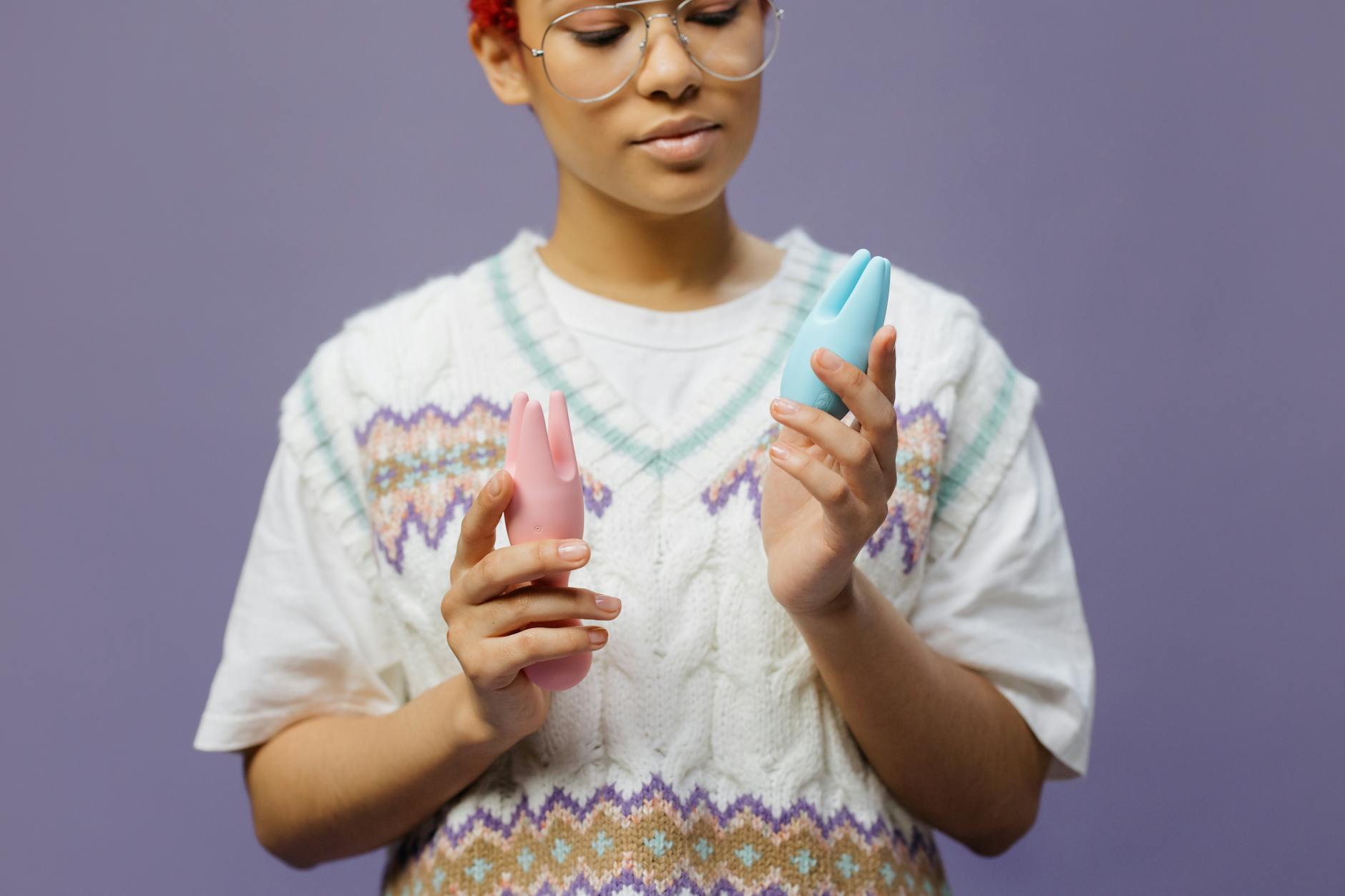
Here's the thing nobody actually talks about: being in a committed relationship doesn't mean your body stops wanting solo time. And solo time doesn't mean you're rejecting your partner. These are two completely different needs occupying the same life, and they can coexist without either one losing something.
Using a lemon vibrator for personal exploration while your partner is home, aware, and comfortable with it, is not infidelity. It's not a secret. It's not even inherently about them being unable to satisfy you. It's about knowing yourself so thoroughly that you don't outsource your own pleasure.
I work with couples where this conversation has never happened, and where one person is essentially waiting for permission they should have already claimed. Let's fix that.
There's a physiological piece here that matters. When you're alone, your nervous system settles differently than it does with a partner present. Your brain isn't dividing focus between sensation and monitoring their response, their breathing, their pleasure. The feedback loop is entirely internal.
This changes everything about what your body is capable of learning. You discover which patterns actually work for your nervous system. Which rhythms create genuine arousal versus the performance of arousal. Which speeds feel good versus which ones you thought should feel good. You're collecting data about yourself that no partner can hand you.
Second, there's an autonomy piece. Pleasure that you've sourced yourself, understood yourself, and owned feels different in your body than pleasure orchestrated by someone else. Even in partnerships built on genuine care and attunement, there's something irreplaceable about knowing what you want because you've asked yourself, not because your partner has asked you.
Third, paradoxically, knowing yourself this well often makes partnered sex better. You arrive with clearer communication. You're not hoping they'll find the thing. You know where it is.
This isn't about sneaking around. If your partner is in the next room, they should know what's happening. Not as confession. As information.
The way you frame this conversation matters wildly. "I want to explore my body alone sometimes with a clitoral vibrator" lands completely differently than "I need time away from you" or "What we're doing isn't working."
If your partner has insecurities about sexuality, solo exploration can feel like rejection. Your job isn't to convince them they're wrong to feel that. Your job is to separate three things:
One: your pleasure belongs to you. It's not a reflection of your partnership. You can adore someone and still need to understand your own body without their presence changing the data.
Two: this is predictable and bounded. You're not disappearing into secrecy. You're saying, "Thursday evening, I'd like an hour alone with the door closed." Your partner knows. They're reading, working, existing elsewhere. It's vanilla.
Three: this often improves things between you. When you arrive at partnered sex knowing yourself better, less resentful about unmet needs you never articulated, and clearer about what actually works for your body, that shows up. Your partner benefits from you being this informed.
That's the conversation. It's not dramatic. It's just clear.
If your partner is home, sound travels. Most people benefit from a closed door and headphones or ambient noise. Some use a fan. Some play music. The point is removing the layer of "am I being heard." You can't relax if you're monitoring.
Lock the door if you need to. Not as drama. As permission to your own nervous system to actually settle. Knowing the space is physically bounded helps.
Time also matters. A 20-minute solo session during the day is different from an hour late at night. Know what you actually need. Are you looking for quick intensity before your partner gets home from work? Longer, slower exploration on a weekend morning? The Lemon Vibrator works for both. Air pulse vibrators give you variety in rhythm and intensity that lets you chase exactly what your body is looking for on any given day.
Practically: silence your phone unless you're using it for music or ambient sound. Remove distractions. You're not checking messages. You're not thinking about email. You're showing up for yourself the way you'd show up for a partner.
Your nervous system will probably surprise you. The first time (or the first few times) you're alone with a lemon vibrator and nobody watching, nobody waiting, nobody present, arousal can take a different shape.
Some people find they climax faster. Some find they take longer because they're not rushing toward someone else's timeline. Some discover they want patterns they'd never ask a partner for because they felt too vulnerable or weird. Some find their body responds to intensity they didn't know existed.
This is all normal. You're collecting information about yourself. Trust the data. If something feels incredible, note it. If something doesn't work for your body, move on. You don't have to perform anything. You don't have to organize it into a story. Just feel it.
Here's where couples sometimes run into trouble: one person uses solo time for exploration and their partner interprets the absence as rejection or proof that the relationship isn't working.
It helps to explicitly name what's not happening. "I need this time for myself" is true and also might sound like "I need time away from you." Better: "I need this time to understand my body without external input. It has nothing to do with how I feel about you."
If your partner feels insecure, that's worth taking seriously. Not by giving up solo time. By understanding what the insecurity is actually about. Is it fear you'll enjoy yourself more alone? Worry that you'll discover you're not attracted to them? Concern that you'll lose interest in partnered sex?
Each one has a different answer. And sometimes the answer is just time and consistency. When they see that you're using solo time consistently and you're still choosing them for partnered intimacy, trust rebuilds.
There's a completely separate conversation about partnered exploration where you both watch, you take turns, or you're in the same room with lemon vibrators. That's gorgeous. That's its own thing.
But solo time is different. It's yours. You don't need to narrate it. You don't need to make it a performance. You don't need to check whether they're enjoying the idea of you enjoying yourself. That's a separate intimacy.
Some couples do find that occasionally sharing solo exploration strengthens connection. You get to witness your partner experiencing pleasure without the pressure of orchestrating it. It can be genuinely hot and also genuinely tender.
If that feels right to both of you, great. If solo time stays solo, that's equally valid. The point is you're choosing consciously, not defaulting.
Using clitoral vibrators alone while your partner is home is not betrayal. It's not infidelity. It's not a referendum on your partnership. It's you showing up for yourself the way you'd want your partner to show up for themselves.
Your partner can be in the next room, fully aware, fully consenting, and fully unbothered. You can have an hour alone with a Lemon Vibrator and come back to your partnership even more connected because you arrived less resentful, less confused about your own body, less dependent on someone else for data about yourself.