
Here's the thing about new relationships and pleasure
You've used lemon vibrators solo. You know what works for your body. Now someone new is in the picture, and suddenly that easy confidence feels complicated. The worry isn't really about the toy. It's about what introducing it means. Will they think you need it? Will they feel replaced? Will the whole mood collapse because you've made it weird?
Honestly though, that's rarely what happens. What actually happens when you introduce a lemon vibrator thoughtfully into early partnered sex is this. Your partner gets to watch you actually experience pleasure. You get to feel both known and desired. And sex becomes collaborative instead of performative.
The trick is timing, framing, and honest communication. None of which are mysterious once you know the pattern.
The right moment to bring it up
Don't wait until you're already in bed. That's when nerves spike and everything feels high-stakes. Introduce the idea when you're clothed, calm, and genuinely talking about sex. For some couples that's while cooking dinner. For others it's a text conversation. The medium doesn't matter. The casualness does.
You're looking for a moment when you're both relaxed and the conversation feels natural. After good sex is actually perfect timing. Your partner is happy, you're connected, and you can say something like, "I really loved that. I want to show you something that makes me feel even better."
If you're not there yet, if you're still in the early weeks, that's okay too. A simple "I'm really excited about where we're headed with this. I want to be upfront about something that matters to me" opens the door without drama.
What to actually say
Forget the long explanation. Your partner doesn't need your entire sexual history or your masturbation routine. They need to understand three things: what you want to use, why you want to use it, and how you're imagining it might feel for both of you.
Try this: "I've been using a lemon vibrator for a while now. It's this clitoral vibrator that works really well for my body. I'd love to try it when we're together. It's not a replacement for anything you do. It's just another way to feel good."
That's it. Direct, factual, reassuring. You're not apologizing for your pleasure. You're not making it mysterious. You're naming the toy, naming the function, and naming what it isn't.
If they ask questions, answer them. How does it feel? What does it do? Can I use it on you? Yes, yes, and yes. The more specific and less coy you are, the faster this stops feeling like a big confession and starts feeling like practical information.
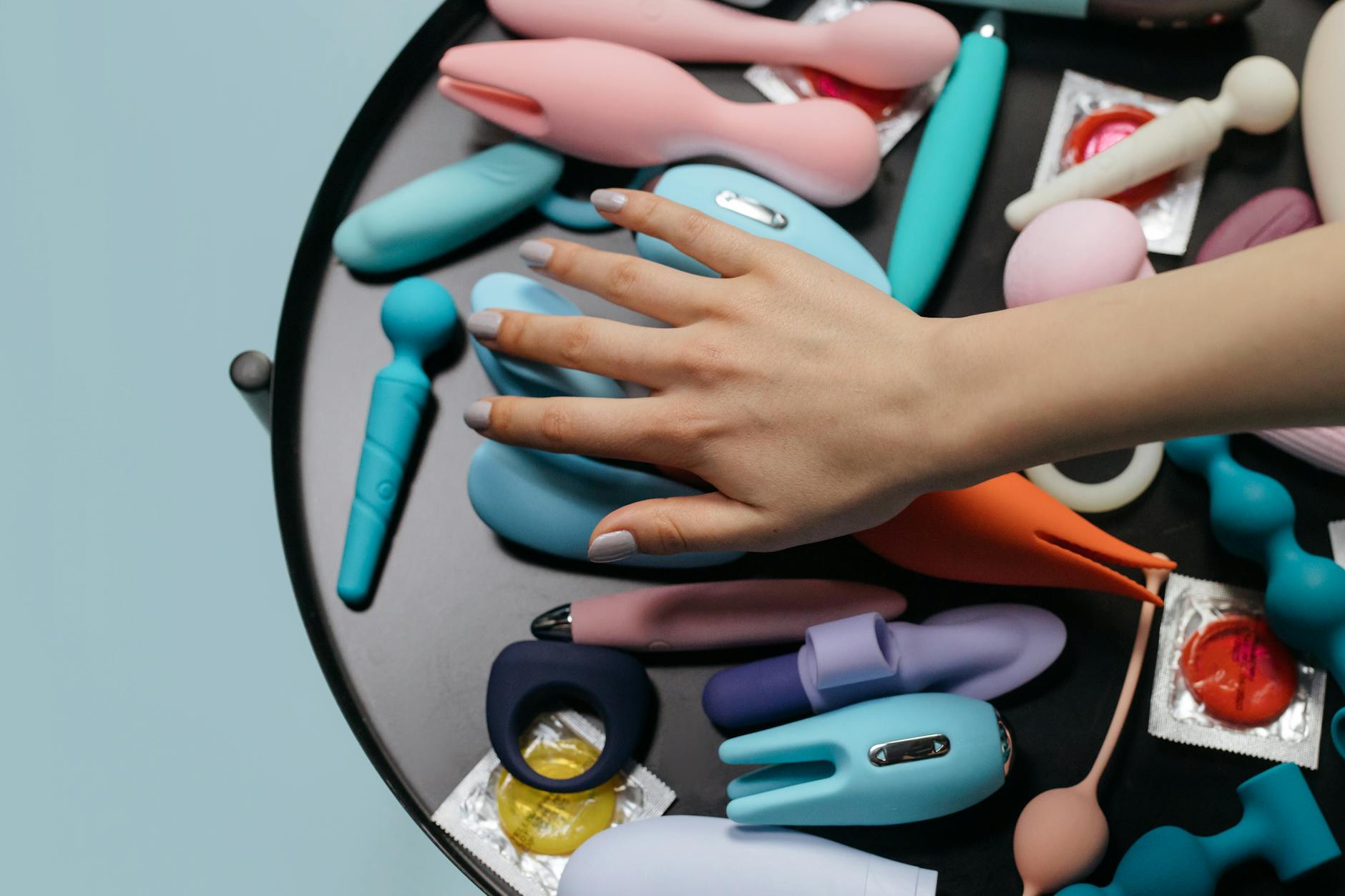
Photo by cottonbro studio on Pexels
How to frame it so it's not threatening
Here's what your partner might be afraid of. That you're not satisfied with them. That you need the toy instead of them. That you're judging their performance. None of these things are usually true, but they can flash through someone's head in a second.
You head that off by being explicit about what the toy is and isn't. A lemon clitoral vibrator isn't a replacement for penetration or for your partner's touch. It's a tool for a specific kind of stimulation that your body responds to. The same way a massage wand isn't a substitute for sex. It's an addition.
You might say: "This just works really well for clitoral stimulation. It doesn't change what I want from you. It's just a different sensation." Or: "I orgasm faster and harder with this. That means more pleasure for me, which I think we both want."
The frame is simple. More of what feels good for you is more pleasure in the relationship for both of you. Most partners get that immediately. The ones who don't usually need to have a bigger conversation about control or insecurity, which is useful information to have early.
The first time you actually use it together
Don't make it the main event. The first time you bring a lemon vibrator into partnered sex, use it during something you're already comfortable with. Maybe during foreplay. Maybe during partnered masturbation. Maybe while your partner is inside you, so there's no question about what's happening and why.
Keep the lights on. Let them see what you're doing. Touch them while you're using it. This is collaborative, not a performance. You're not trying to put on a show. You're trying to feel good while you're connected to them.
Start on a lower pattern if you're using something like the lem vibrator. The novelty of someone watching you might make you more sensitive than usual. Give yourself and your partner time to adjust to the idea.
After, talk about it. Not a heavy debrief. Just a simple check-in. "That felt amazing. Did you like watching?" or "How was that for you?" Most people have opinions and they usually come out naturally once you ask.
What if they're nervous or resistant
Some partners have a harder time with this. They might feel less needed, or they might have some old-school idea that vibrators are a last resort instead of just a tool. If that's what you're running into, you might need to do a bit more explaining.
Asking questions helps. "What are you worried about?" is better than defending. Let them say it out loud. Sometimes the worry is small and evaporates once you address it. Sometimes the worry is bigger and points to something else you both need to discuss, maybe with a therapist.
Here's what I know from years of working with couples. The partners who struggle with toys usually struggle with the idea that their partner might want something different than what they can provide. That's a real thing to work through, and it's not about the vibrator. It's about control, insecurity, or unmet emotional needs. All of which are worth addressing, but all of which deserve a real conversation, not a compromise where you hide your pleasure.
You don't owe your partner your sexual silence. If a lemon vibrator makes you feel better, that matters. If your partner can't make space for that, that's information about compatibility.
The ongoing rhythm after that first time
Once you've used it together once, it stops being a Big Thing. It becomes just part of what you do. Some partners love incorporating it regularly. Some want it occasionally. Some want to use it on you themselves, which is its own kind of intimacy.
Let that rhythm develop naturally. You don't have to use your lemon clitoral vibrator every time you have sex. You also don't have to ask permission every time you want to. It's your pleasure. You get to be the expert on your own body.
If you notice patterns, name them. "I'm pretty consistent about needing this for orgasm," or "I like it better when we've already been intimate for a while." Your partner benefits from that information. It helps them understand how you work and what turns you on.
When mismatched expectations create friction
Sometimes one partner wants toys to be central to your sexual life and the other wants them rarely or never. That's a real mismatch and it's worth naming directly. The conversation isn't "should we use vibrators," it's "how do we each feel about our own and each other's pleasure, and what are we willing to work with here."
If you're in that conversation, the book "Come As You Are" by Emily Nagoski has genuinely useful frameworks for understanding different sexual templates and finding overlap. So does talking to a sex-positive therapist if the friction is real.
Most couples figure this out fine. One person brings a toy into the relationship, the other adjusts, and within a few months it's completely normal. But some couples learn in the process that they have different values around pleasure or control or spontaneity, and that's useful to know.
The thing nobody tells you
Introducing a lemon vibrator to a new partner often strengthens the relationship because you have to be honest about what you need. You can't hide in politeness. You can't perform. You have to actually say, "This is what feels good to me," and let your partner decide if they can be with someone who knows and claims their own pleasure.
The ones who can? That's the foundation of good sex. The ones who can't? You've learned something important about compatibility really early, which is a gift.
Frequently asked questions
Can I bring a lemon vibrator to sex if we haven't talked about toys before?
Technically, yes. Practically, no. The conversation doesn't have to be long or serious, but it should happen first. Even a simple "I want to show you something I love" in the moment can work, but most people feel less blindsided if you've given them a heads-up. Respect their surprise or resistance if it comes up. You might need to pause and check in.
What if my partner wants to use it on me but I'm not sure I want that?
You get to say no or "not yet." Your body, your rules. If they're pressuring you, that's useful information about how they respect boundaries. If they're just excited and willing to wait, that's usually sweet. You can always change your mind later and let them explore.
Does using a lemon vibrator during sex mean we're not connecting?
No. If anything, it's often the opposite. You're both focused on your actual pleasure instead of performing for an imagined audience. You're communicating about what works. You're vulnerable. That's connection, even if it doesn't look like what movies show.
How do I know if my partner really likes it or is just tolerating it?
You ask. And you watch their body language. Someone who's uncomfortable usually gets quieter or more tense. Someone who's into it leans in, asks questions, touches you more. If you're genuinely unsure, the solution is not silence. It's a simple "Are you actually enjoying this or are you doing it for me?"
Should I use a lemon vibrator every time we have sex?
Use it as much as you want. Some people need it to orgasm. Some people use it sometimes. Some people use it during certain phases of their cycle. There's no rule. The only rule is that you're not using your own pleasure as currency. You use it because you want to, not because you're negotiating or performing.
What if introducing toys leads to deeper relationship problems?
Then you've learned something important and you deal with it. Sometimes talking about pleasure uncovers misaligned values about control, autonomy, or intimacy. That's not a toy problem. That's a relationship problem that deserves real conversation, maybe with a therapist. Don't drop the toy to avoid the conversation. Address both.
The bottom line
Introducing a lemon vibrator to a new partner is not a big risk. It's a clarity moment. You get to see whether someone can celebrate your pleasure or whether they need to make it about them. You get to practice asking for what you want. You get to experience sex that's collaborative instead of performative.
That's not just good sex. That's the foundation of a relationship worth having.
If you're navigating this and want to talk through it, we're here. Reach out at /contact and let's work through what's actually going on.