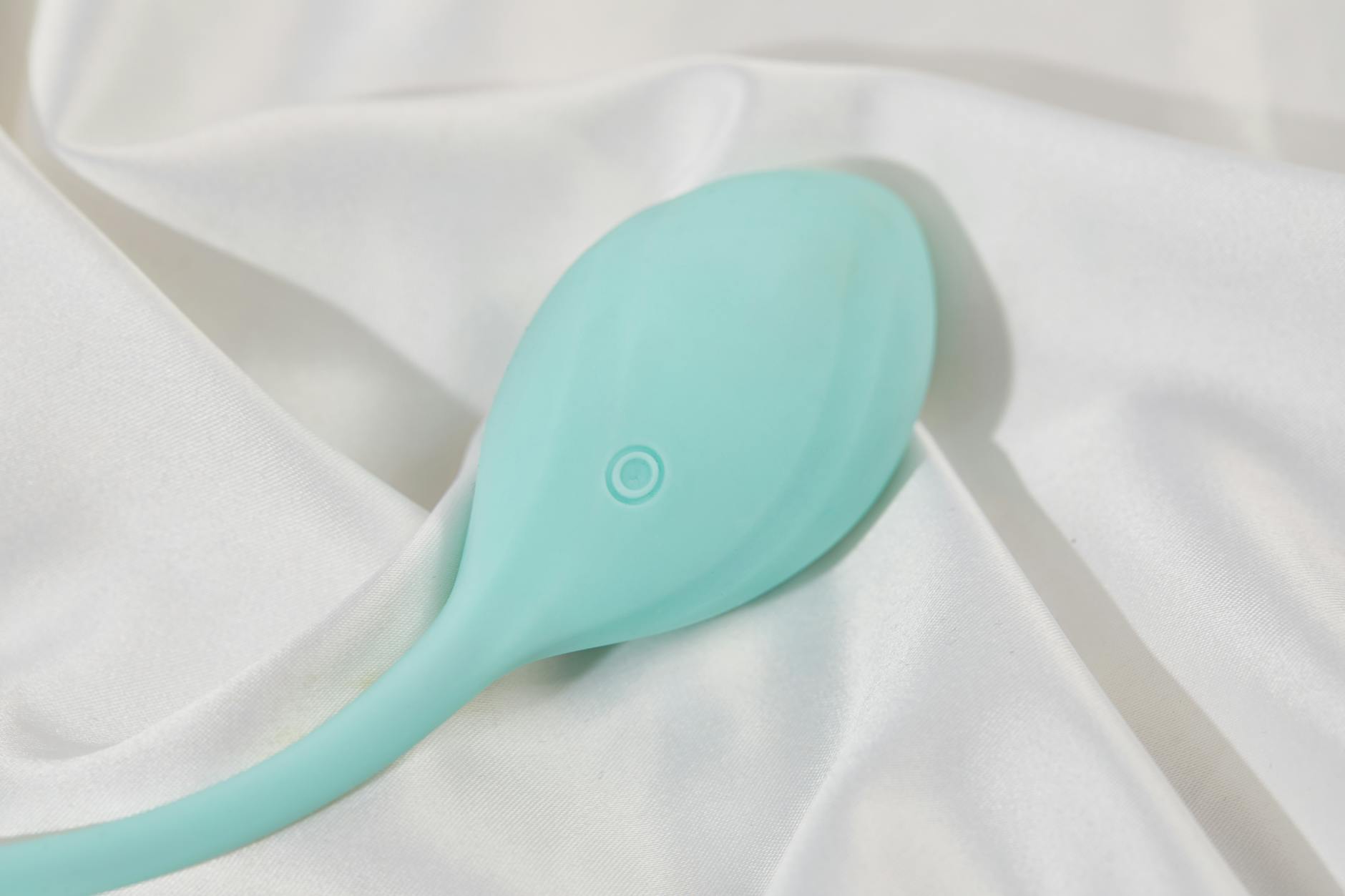
Let's talk about your cycle and your clitoral vibrator
If you've noticed that your lemon vibrator feels wildly different depending on what week it is, you're not imagining it. The same device at the same pressure setting can feel like pure bliss one week and too intense the next. That's not a problem with the toy. That's your hormones doing exactly what they're supposed to do, and your nervous system responding accordingly.
Understanding this month-to-month shift is the difference between feeling frustrated with your pleasure routine and actually owning it. Most people never connect the dots between their menstrual cycle and how stimulation feels. Once you do, everything changes.
What happens hormonally across your cycle
Your menstrual cycle isn't just about bleeding. It's a full hormonal landscape shift that happens in four distinct phases. Estrogen and progesterone rise and fall in different patterns, which affects blood flow to your genitals, nerve sensitivity, skin thickness, and how your nervous system responds to touch.
Think of it like this: your clitoris is exquisitely sensitive to hormonal changes. The tissue swells and softens, blood flow increases, and the nerve endings become more or less responsive. When you add a lemon vibrator into that mix, you're applying consistent suction and patterns to tissue that's literally changing week to week. The device doesn't change. Your body does.
Menstrual phase: sensitivity peaks, patience pays
This is when you're bleeding. Estrogen is dropping, progesterone is low, and your pelvic floor is often more tense than usual. Pain tolerance actually decreases during this phase, and many people feel more sensitive to touch, not more.
If you're using a lemon clitoral vibrator during your period, this is the week to dial it back. Start at patterns 1 and 2 instead of your usual 4 or 5. The suction works beautifully during this phase because it's gentler than direct vibration, but you might want less overall intensity. Some people skip penetrative pleasure entirely during their period and focus on external stimulation only. That's smart listening to your body.
Plentyof people orgasm more easily during menstruation because the pelvic floor is already engaged and aroused. If that's you, lean into it. Others find it uncomfortable or distracting. Both are normal. The lemon adult toy shines here because you can adjust intensity precisely, so you're not locked into one setting.
Follicular phase: desire climbs, go a bit harder
This starts on the first day of bleeding and ends around ovulation (roughly day 1 to day 14, though it varies). Estrogen is rising steadily, and so is testosterone. You're moving toward your hormonal peak.
This is often when people feel most interested in pleasure. Arousal builds faster. Orgasms tend to be easier to reach. Your clitoris has better blood flow, and the tissue is plumper and more responsive. This is the week your lemon vibrator might actually feel too gentle at lower settings.
If you typically use pattern 3 during other phases, you might crave pattern 5 or 6 during the follicular phase. The suction sensation feels richer. You can handle longer sessions without fatigue. This is also the week when many people want to pair their lem vibrator with penetration or partner play. The neurological appetite for complexity is higher.
As you approach ovulation (the end of this phase), arousal doesn't just peak. It stays elevated. This is when you might find yourself reaching for your lemon sexual toy more often, wanting more intense patterns, or experimenting with techniques you usually skip.
Ovulatory phase: the sweet spot
This is brief, usually just 24-48 hours when your luteinizing hormone surges and you release an egg. But hormonally, it's the peak of your cycle. Estrogen is at its absolute highest. Testosterone is also elevated. You're at maximum fertility and maximum arousal potential.
For many people, this is when orgasms come most easily. The clitoris is maximally engorged with blood. Nerve sensitivity is high, but in a responsive way, not an overwhelmed way. If there's a week when your lemon vibrator absolutely sings, it's probably this one.
Some people barely notice this phase. Others feel dramatically different. If you track your cycle using an app or a calendar, mark the days when pleasure felt easiest or most intense. You might be surprised by the pattern.
Luteal phase: slower arousal, more time needed
This phase runs from after ovulation until your period starts (roughly day 15 to day 28). Estrogen peaks early, then drops. Progesterone rises and stays elevated. This is often when people feel the opposite of the follicular phase.
Arousal takes longer to build. The clitoris has less blood flow. Stimulation might feel a bit duller. If you've been using pattern 5 all month, you might need pattern 6 during the luteal phase just to feel the same sensation. Or you might need 20 minutes of warm-up instead of 10. Both are normal.
Progesterone also affects mood and stress response. Many people feel more irritable, tired, or emotionally cautious in the days before their period. That emotional state affects arousal too. You might not feel like using your lemon vibrator at all, and that's not a sign that anything's wrong.
The luteal phase is also when many people experience what's called "pre-menstrual magnification" of sensory sensitivity. Something that felt good mid-cycle now feels overwhelming. This is the week to respect your nervous system and adjust your pressure settings accordingly. You're not broken. You're cycling.
How to track your own patterns
Here's what I recommend: for the next two months, note when you use your lemon clitoral vibrator and which intensity patterns felt best. Note the approximate date in your cycle (there are free apps for this). After two cycles, patterns usually emerge.
You might discover you feel most aroused around ovulation. You might find that the luteal phase requires a completely different approach. You might learn that your period is actually a time when you crave pleasure and closeness. All of these are data points worth knowing.
Some people are pattern-driven and love having a roadmap. Others find it restrictive. If tracking feels clinical and kills the mood, don't do it. But if you're someone who likes to understand how your body works, this is genuinely useful information.
What to actually do differently
First, adjust intensity. Most lemon vibrators, including the Lem, have multiple patterns. Use them. If you hit your period and your usual setting feels aggressive, drop down one or two levels. This isn't settling. It's listening.
Second, change your warm-up time. During the luteal phase, budget an extra 10 minutes of foreplay, fantasizing, or lower-intensity patterns before ramping up. Your body will get there. It just needs the runway.
Third, experiment with technique. The same device with different positioning can feel completely different. During high-sensitivity phases, angle your lemon sexual toy slightly differently. Explore whether you prefer sustained suction over pulsing patterns.
Fourth, pay attention to penetration. Some people want internal stimulation during certain cycle phases and zero interest in others. Your lemon vibrator is external, but if you're partnered or using other toys, honor that cycling desire.
The relationship angle
If you're in a relationship, this is worth discussing. Your partner might notice that your pleasure needs shift. Instead of that becoming a source of confusion ("You wanted this last month, why not now?"), frame it as helpful information. "During this phase of my cycle, I need more warm-up" or "I want lower intensity for a few days" gives your partner clarity and prevents misinterpretation.
Many couples find that syncing pleasure with the cycle actually brings them closer. It's another form of knowing each other deeply. It removes the assumption that desire or response should be constant, which it never is.
When cycle tracking reveals something else
If you're noticing that your arousal is declining across all cycle phases, not just one, that's worth investigating with a healthcare provider. Similarly, if pleasure that used to be easy is now hard consistently, something else might be happening: stress, medication changes, relationship shifts, or health issues.
Cycle-based sensitivity changes are normal. Across-the-board decline in arousal or pleasure isn't something your lemon vibrator can fix on its own. That's a signal to get support.
FAQ
How long does it take to notice cycle-based changes in pleasure?
Some people feel shifts immediately. Others need two to three full cycles to see the pattern clearly. Stress, sleep, and relationship dynamics all muddy the picture. If you're tracking, give yourself at least two months before assuming the pattern you're seeing is your actual baseline.
Can I use my lemon vibrator daily no matter where I am in my cycle?
Technically yes, but it might not feel as good. Using your clitoral vibrator strategically during peaks in your cycle often delivers more satisfying pleasure than daily use. Some people find daily use flattens sensation entirely. Others maintain sensitivity just fine. Again, it's individual.
Does the luteal phase actually lower libido, or is that a myth?
It's not a myth, but it's also not universal. Progesterone does tend to lower dopamine, which affects motivation and desire. But plenty of people feel horny throughout their entire cycle. Cycle tracking can clarify whether you're genuinely less interested or whether it's stress, external life events, or relationship issues disguised as hormonal change.
If I'm on hormonal birth control, do I still cycle through these phases?
Not in the same way. Hormonal contraception flattens hormonal fluctuations by design. Some people on the pill still notice subtle changes. Others feel completely stable. With IUDs, the variation depends on whether it's hormonal or copper. Your pleasure patterns might be more consistent on hormonal birth control, or they might still shift slightly. Everyone is different.
Should I adjust my lemon vibrator settings or my expectations?
Both. Some of it is the device. Much of it is expectation and patience. If you're expecting the same intensity to feel the same every single day, you'll be frustrated. If you adjust your settings and warm-up time based on where you are in your cycle, pleasure usually feels more reliably good.
What if my cycle is irregular? Can I still use this framework?
Yes, but you're tracking more carefully. If your cycle varies from 22 to 35 days, you can't predict ovulation as easily. But you can still notice when arousal peaks, when you feel more sensitive, when lemon adult toys feel amazing versus when they feel meh. The principle is the same. The calendar is just messier.
Your pleasure deserves this much attention
Most people are taught that their body should respond the same way every single day, and they blame themselves when it doesn't. The truth is messier and more interesting: your body is designed to change. Your clitoris is exquisitely sensitive to those changes. Your lemon vibrator is a tool that can work beautifully across all of them if you're willing to adjust.
That's not extra work. That's respect for your own biology. And honestly, it makes pleasure better. Not just easier. Better.