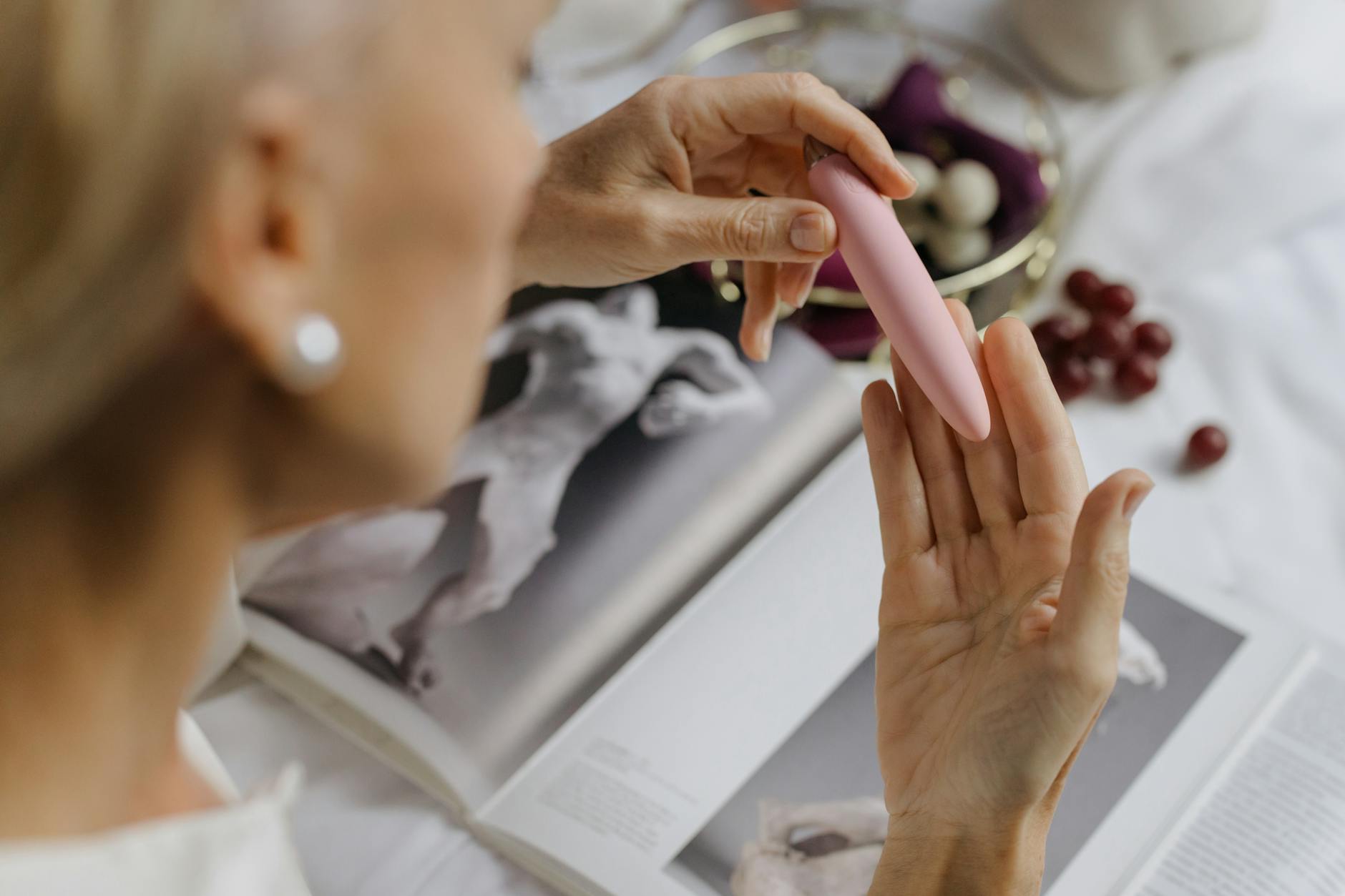
Here's what nobody says about air pulse intensity
Lemon vibrators and other clitoral vibrators that use air pulse or suction technology deliver a completely different sensation than traditional vibration. It's not stronger, exactly. It's more encompassing. The stimulation wraps around the entire clitoral head instead of buzzing against it from one angle. And if you go in at full intensity expecting a gentle toy, the experience can feel jarring, overwhelming, or even painful.
That doesn't mean air pulse isn't for you. It means you might need a different entry strategy than the one you'd use with a standard vibrator.
Why air pulse intensity hits differently
Traditional vibrators oscillate back and forth, creating micro-movements on the surface of your skin. Air pulse technology (also called suction stimulation) creates rhythmic pressure waves that stimulate nerve endings deeper in the clitoral tissue. It's a fundamentally different mechanical action.
Think of it this way: a regular vibrator is like drumming your fingers on a table. Air pulse is like pressing and releasing your whole hand in a steady rhythm. More pressure. More surface area. More sensation happening at once.
The intensity curve on lemon clitoral vibrators often starts lower than you'd expect but ramps up steeply in the middle settings. That jump between pattern 2 and pattern 3, or between pattern 5 and pattern 6, can catch people off guard.
Start stupidly low
I'm not exaggerating. If you're someone who normally uses setting 7 on a standard vibrator, start your lemon vibrator exploration at pattern 1. Seriously.
Here's the experiment: apply lube, settle in, and spend a full five minutes at the lowest setting. Not hovering above the clitoris. Actually resting the device and letting it do its job.
What you're doing is training your nervous system to recognize this new sensation as pleasure instead of shock. Your clitoris has never felt this kind of pressure before. Your brain needs time to interpret it. That time is not wasted. It's the only way to actually calibrate your tolerance.
Understand the pattern architecture
Most clitoral vibrators give you 8-12 pattern options. On Lemon's range, they're built like this:
Patterns 1-3 are pulse variations. Rhythmic. Relatively gentle. Build arousal.
Patterns 4-6 introduce intensity or speed changes. These are where things get interesting. Also where first-timers often jump in too fast.
Patterns 7 and up are the deep-end stuff. Sustained intensity, rapid pulsing, or escalating patterns. Save these for later.
Many people skip straight to the "intense" section because they assume intensity equals better sensation. Not always. The middle patterns often hit differently (read: better) because there's dynamic range. The stimulation builds, releases, builds again. That rhythm is what creates most orgasms, not raw power.
The warm-up protocol that actually works
Don't jump straight to your target area. Start broader.
Begin at pattern 1 on the outer labia, the upper thigh, even the abdomen. Anywhere that isn't hypersensitive. Spend two to three minutes letting your body adjust to the sensation.
Then move to the clitoral hood. Not directly on the clitoris yet. Just the area around it. Let the vibration diffuse through the tissue.
Only after five to eight minutes of this approach should you try direct contact with the clitoral head. By then, the tissue is engorged, the sensation feels expected rather than shocking, and your brain is ready for it.
This isn't gentle foreplay pretending to be practical advice. This is how your body actually adapts to new input without triggering the guard reflex that makes everything feel like too much.
Lubrication is non-negotiable here
With traditional vibrators, lube helps. With air pulse devices, lube is essential architecture.
The seal between the device head and your skin is what creates pressure. Without enough lube, the seal is imperfect, the sensation becomes scratchy or burns, and you'll blame the toy instead of the technique.
Use a water-based lube. Apply it generously. I'm talking more than you think you need. The device will use it up as you go, so front-load it.
If you find yourself drying out mid-session, stop and reapply. This isn't a sign that air pulse isn't for you. It's a sign that lube management is part of your technique.
How to dial intensity without jumping settings
You don't have to progress linearly. You can stay on pattern 3 for three weeks and that's fine.
But when you're ready to explore more, here's how to do it without shocking your system:
Spend a full session at your current pattern. Get comfortable. Reach orgasm if you can. That's important data.
Not a week later. Not tomorrow. A few days later, when you're aroused and ready, try the next pattern for just 30 seconds. Feel it. Go back to your comfortable pattern.
That 30-second taste desensitizes you slightly and lets your nervous system learn the new baseline without forcing it.
Repeat this over sessions until the next pattern feels normal. Then try the one after.
This is slow. This is also how you actually build intensity tolerance instead of white-knuckling through settings that feel like they're attacking you.
When sensation still feels like static or numbness
Sometimes people report that air pulse feels like pressure without pleasure. Like a massage tool, not an erotic device. This usually means one of three things:
First, you're holding it wrong. Angle matters. The head should sit flush against your skin, not at an angle. Slight adjustments to how you're angling the device can change the sensation dramatically.
Second, you need more arousal prep. If your tissue isn't fully engorged, air pulse sensation can feel diffuse instead of focused. Spend more time on buildup. Use hands. Use mental energy. Get properly turned on.
Third, your clitoris might respond better to traditional vibration. That's real and valid. Lemon vibrators aren't magic. They're a different tool. Some bodies click with them immediately. Others need weeks of acclimation. Some never prefer them to standard vibrators, and that's okay.
Using lemon clitoral vibrators alongside partners
If you're using a lemon vibrator with a partner present, air pulse actually has an advantage over traditional vibration: lower noise. Most people find them quieter, so there's less distraction and more room for communication.
But intensity can still feel isolating if it ramps too fast. Your partner might feel like they can't contribute. You might feel like you have to choose between their touch and the device.
Solution: keep it on lower patterns when partnered. Patterns 1-4 let you maintain connection and interaction. Save the higher patterns for solo exploration until you're deeply familiar with your own response.
When you do use higher intensities partnered, communicate beforehand. Say something like: "I'm going to go higher on this device. I might be less responsive to touch for a bit. That's not about you." It sounds clinical, but it prevents the weird tension that builds when one person suddenly seems checked out.
The patience payoff
Honestly, most of the people I work with who struggled with air pulse intensity wish they'd spent more time on patterns 1-3. They eventually looped back, gave them real attention, and discovered those patterns were actually their sweet spot. Not intermediate. Their favorite.
Lemon vibrators deliver sensation the way your body is actually wired to respond. You just have to give your nervous system time to recognize it as pleasure instead of novelty.
Common questions about managing intensity
Can you damage your clitoris by using air pulse at high intensity?
Not really, no. Your body has pretty robust feedback. If something hurts, you'll stop. The issue isn't damage. It's overstimulation fatigue, where your nerve endings get tired and sensation becomes numb or painful. This is temporary and resolves with rest. Start low, ramp slow, and this almost never happens.
What if you can orgasm fine at high intensity but it feels like pressure rather than pleasure?
You might be numbing yourself to reach orgasm. This is common with people who've used intensity as their go-to strategy for years. Your body can absolutely achieve climax at high intensity, but pleasure and climax aren't the same thing. Spend a few weeks deliberately staying on lower patterns to recalibrate your nervous system. Pleasure comes back once you stop white-knuckling toward the finish line.
Is it normal to need a break after a few minutes at high intensity?
Completely normal. Air pulse at patterns 6 and up creates focused stimulation that your nervous system can only take so much of. If you need to drop down to a lower pattern midway through, or switch to a partner's touch, or take a break entirely. Your body's asking for variation. That's smart feedback, not failure.
Can you gradually build up tolerance so you eventually prefer high intensity?
Some people do. Others discover that patterns 3-5 are genuinely their preference and that's where they stay. Both are fine. The goal isn't to reach the highest setting. It's to expand your options and find what actually feels good.
Should you avoid air pulse entirely if you have a sensitive clitoris?
No. Sensitivity often means you need more careful intro work, not avoidance. Start at pattern 1. Use the warmup protocol. Give yourself weeks instead of days. Many people with hypersensitive clitorises end up preferring air pulse because the diffuse pressure is actually gentler than direct vibration once they're properly acclimated.
What if you orgasm immediately at low intensity?
Great. Seriously. That tells you something valuable: your body responds to this type of stimulation. If you want longer sessions or multiple orgasms, try increasing your arousal time before you bring the device in. The point isn't to delay climax arbitrarily. It's just having options.
Next steps
If you're curious about air pulse but intimidated by intensity, start with Lemon's range at the lowest pattern. Give it real time. Not one session. A week minimum. Track what you notice: does sensation change as arousal builds? Does comfort increase with repetition? Does your preference shift?
That data is yours to use however it serves you. If lemon clitoral vibrators click for you, great. If they don't, that's also fine. You've got options, and you've got information. That's what matters.
Have questions about what might work for your body? Reach out and let's talk.
Related reading
If you're exploring how air pulse works with your specific body, these posts might help:
How to Use Lemon Vibrators When Air Pulse Stimulation Feels Too Intense breaks down the sensation in more clinical depth.
How to Find the Right Lemon Vibrator Pattern for Your Body walks through pattern architecture and preference testing.
How Lemon Vibrators Work When You Have No Prior Toy Experience covers foundational stuff if this is your first clitoral vibrator.